Imagine opening an app, and it just makes sense.
Not because you learned the flow, but because the app learned you. Today, people expect experiences that adapt to their behavior, feel personal, intuitive, and uniquely theirs throughout the entire user journey.
A research from Mc Kinsey shows that over 75% of consumers are turned off by content that doesn’t feel relevant. The bar keeps rising, and AI makes it possible to meet that bar at scale.
This is where AI-driven apps come in. They observe behavior in real time, predict intent, and reshape the user journey as it happens. Ignoring AI in app development today is a bit like ignoring mobile in the early 2010s. You can do it, but you’ll spend the next few years explaining why users quietly moved on.
By 2026, major percent of customer interactions will be influenced by AI, and the winners won’t be the apps with more features, but the ones that understand users better.
This is the new era of user journeys.
Adaptive. Co-created. AI-powered.
TLDR;
- AI-Driven apps are replacing static, rule-based applications.
- User journeys are shifting from fixed flows to adaptive systems.
- AI enables real-time behavior analysis, intent prediction, and journey orchestration.
- Competitive advantage is moving from feature count to user understanding.
- By 2026, most customer interactions will be influenced by AI-driven systems
Why Is the Old App Model Breaking Down?
Traditional apps were built around a simple assumption: user behavior can be predicted in advance. Teams designed fixed flows, optimized funnels, and measured success by how closely users followed predefined paths.
Modern users switch devices, pause journeys, return with new intent, and expect continuity.
Static logic cannot respond to this fluid behavior. The result is not obvious failure, but quiet friction that leads to disengagement and churn. The old app model breaks down because it treats the user journey as a fixed sequence, while real journeys are dynamic systems.
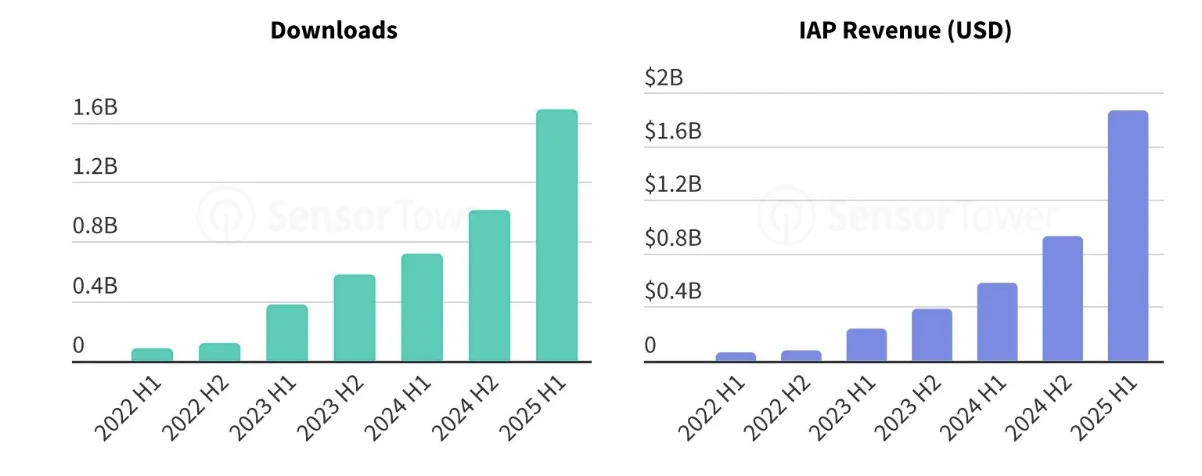
AI-enabled app downloads reached 1.5B+ in H1 2025, with nearly $1.8B in in-app revenue—proof that AI features drive both adoption and spending.
The Rise of AI-Driven Apps: Beyond Automation to Intelligence
What “AI-Driven User Journey” Really Means
Early AI adoption focused on automation. Chatbots answered FAQs. Rules triggered notifications. These systems reduced effort, but they did not fundamentally change how apps understood users.
AI-Driven apps represent a deeper shift.
An AI-Driven app continuously learns from behavior, detects patterns, and adapts the experience in real time. Intelligence replaces instruction. The app no longer waits for users to adapt. It adapts to them.
The competitive edge is no longer speed of delivery. It is depth of understanding.
So what’s an AI-driven user journey? A user journey that is dynamically shaped by real-time behavior, contextual signals, and AI-driven intent prediction rather than predefined paths.
How It Works
- User interacts with the app
- AI observes behavioral signals
- Intent is inferred in real time
- Experience adapts immediately
Key Differences
| Traditional Journey | AI-Driven User Journey |
| Predefined steps | Dynamic paths |
| Designed once | Continuously learned |
| Optimized after drop-off | Adapted before friction |
Where AI and UX Truly Meet
AI does not replace UX design. It changes its role.
Traditional UX is locked in at launch. AI introduces adaptability. The real value of AI in UX lies in context awareness, not complexity.
In AI-Driven apps:
- UX provides structure
- AI provides adaptation
- Context determines timing
Good AI-driven UX often does less, not more. It reduces prompts, delays interruptions, and surfaces information only when it adds value.
When done well, intelligence becomes invisible. The experience simply feels natural.
The Strategic Value of AI in User Journeys
Across mobile products, teams optimize the same four levers: retention, conversion, ARPU ( (Average Revenue Per User), and cost to serve. AI improves each one through small, compounding improvements across the user journey rather than dramatic redesigns.
Retention
- AI reduces friction by making each session immediately relevant
- Right content or shortcut surfaced at the start increases return usage
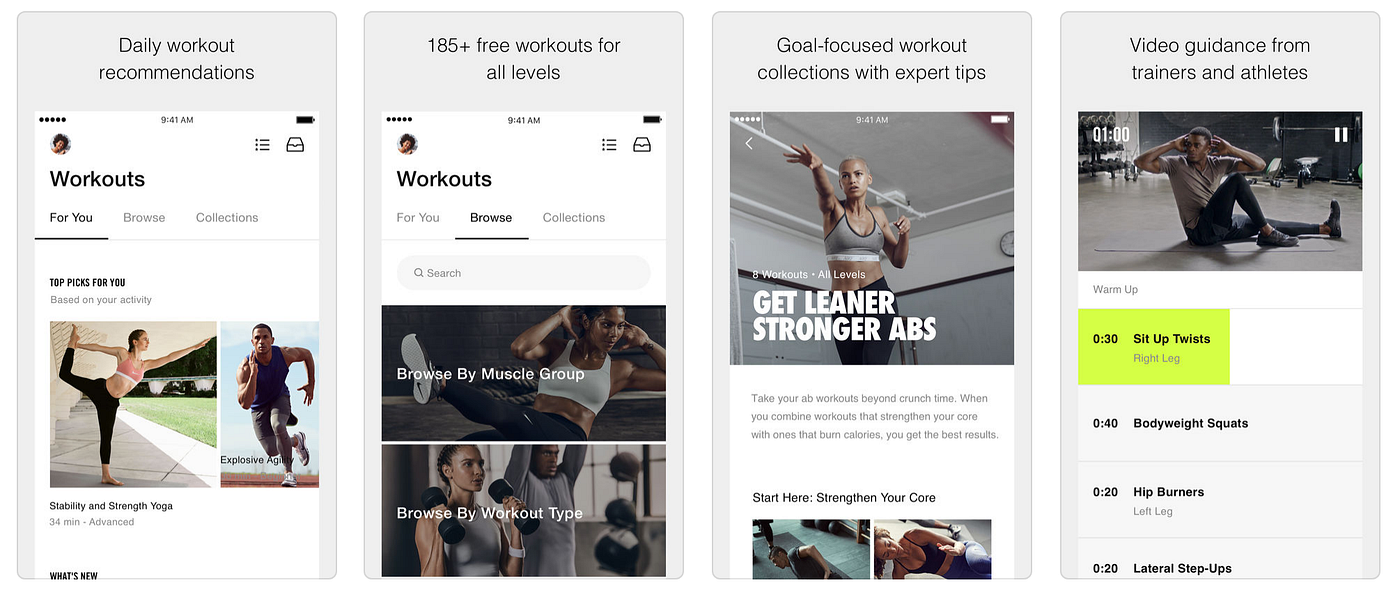
- Example: Nike Training Club adapts workout plans based on completed sessions to keep users engaged
Conversion
- Predictive UX shortens the distance between intent and action
- AI removes unnecessary steps and improves timing in critical flows
- Fewer taps lead to higher completion rates
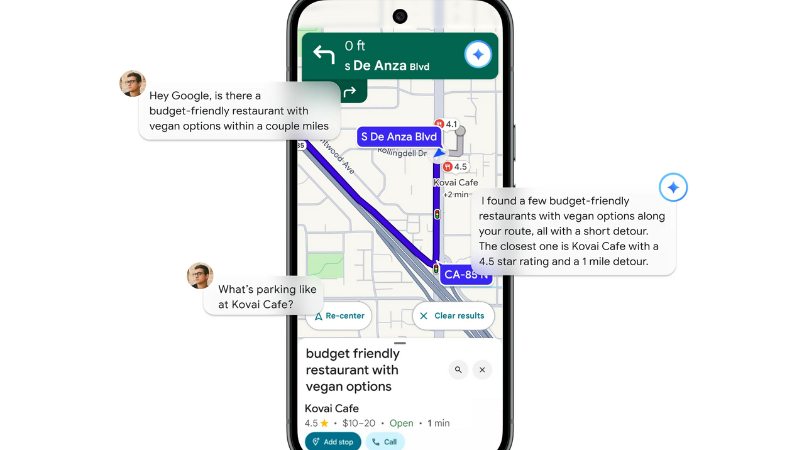
- Example: Google Maps uses Gemini-powered suggestions to predict next actions and turn exploration into ready-to-follow routes.
ARPU
- Personalization increases revenue when relevance is high
- AI selects the right product, content, or offer at the right moment
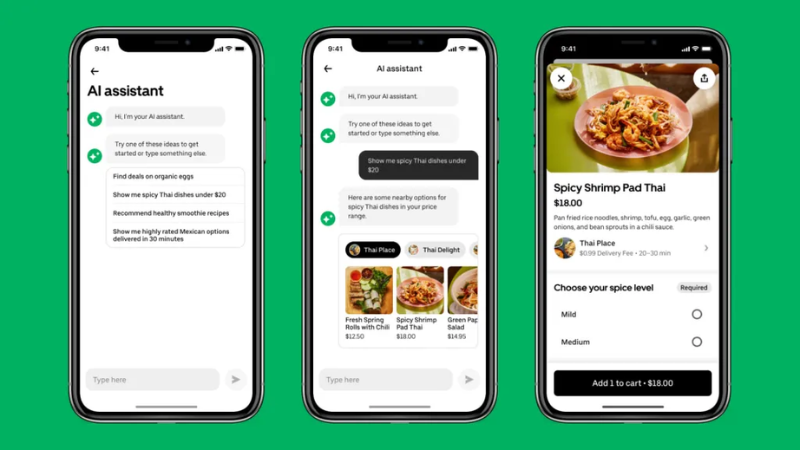
- Example: Uber Eats personalizes restaurant rankings and offers using behavior, time, and location and also AI assistant to find deals.
Cost to Serve
- AI automates repetitive support interactions
- Each deflected ticket lowers cost per contact
- Faster resolution prevents drop-off and abandonment
What This Looks Like in Real AI-Driven Apps
Winning with AI is about compounding micro-wins, not big features. The most effective AI-Driven apps apply small, repeatable patterns that remove friction, ship fast, and improve continuously across the user journey.
Personalization That Respects Privacy
- Uses first-party signals and contextual behavior
- Feels obvious and useful, not intrusive
- Improves session relevance and return frequency
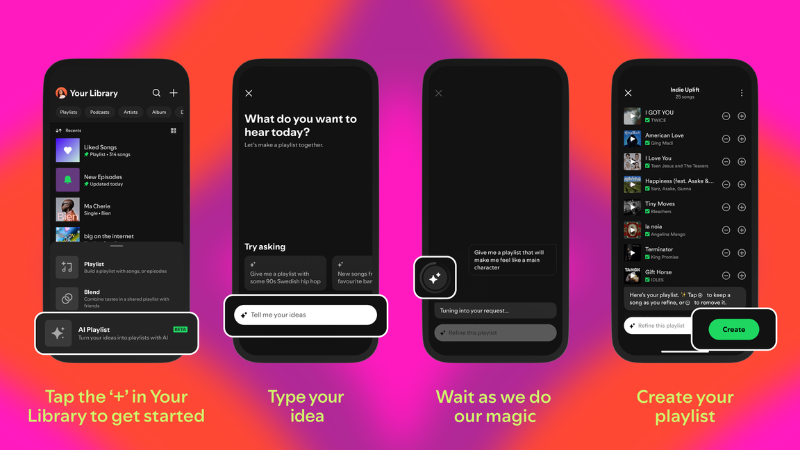
Example: Spotify – AI-generated playlists adapt to listening habits and natural-language prompts. Users can steer recommendations, keeping personalization powerful but controlled
Payoff: faster session starts, higher retention.
Predictive UX That Anticipates the Next Step
- AI surfaces the next best action before users search
- Reduces taps between intent and outcome
- Collapses complex flows into quick confirmations
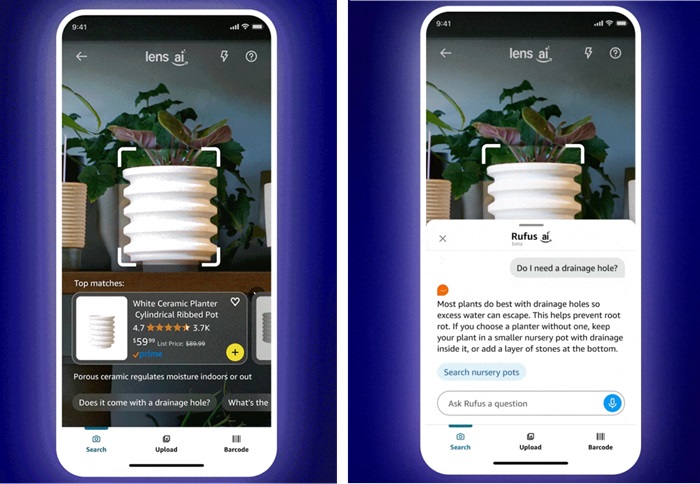
Example: Amazon Lens Live combines vision and generation to speed up product discovery
Payoff: fewer stalls, more completions, higher conversion.
In-App Assistance Grounded in Your Content
- Keeps users in flow instead of sending them to support channels
- Answers are constrained to policies, FAQs, and in-app language
- Human fallback remains available for low-confidence cases
Example: Booking.com uses AI to assist with trip planning, changes, and disruptions directly in-app.
Payoff: lower cost to serve and smoother customer journeys.

Case in Point: The GIANTY Perspective
At GIANTY, we focus on AI that creates connection, not just automation. Our view of AI-driven apps centers on three core ideas.
- AI as an engagement engine: AI anticipates user needs, adapts onboarding, and offers proactive guidance so every interaction feels immediately useful.
- AI as a real-time journey orchestrator: Experiences adjust instantly. Notifications become contextual, recommendations stay relevant, and support turns predictive rather than reactive.
- AI that learns and adapts: Our AI systems improve with every interaction, refining personalization, reducing churn, and strengthening retention over time.
As a game development company, we also see gamification when combined with AI-driven personalization as one of the most effective ways to bring users back, across industries like fintech, education, and entertainment, by turning the user journey into a dynamic, motivating experience rather than a static flow.
We don’t see apps as static products, but as living ecosystems shaped continuously by user behavior and intelligence.
The Future Is Now and Questions to Ask Your Team
AI-driven apps are no longer experimental. It is already shaping how users experience mobile apps. The real risk is building products that cannot learn as expectations rise.
Before adding more features, teams should ask:
- Does our app adapt to real user behavior or force fixed flows?
- Can we detect user intent in real time, not just analyze it after drop-off?
- Is AI embedded across the entire user journey or isolated in one feature?
- Are UX and AI designed together from the start?
- Can the system improve continuously without manual redesign?
- Are trust, privacy, and explainability built into every AI decision?
- Are we optimizing for small, compounding improvements in retention, conversion, and ARPU?
Conclusion
The next generation of apps won’t win by adding more screens or smarter buttons.
They’ll win by remembering, anticipating, and adapting. This is where retention compounds, trust deepens, and growth becomes sustainable.
So…the main key is: the best apps grow with their users. GIANTY blends AI and game-design thinking to create AI-driven apps that adapt continuously and turn ordinary interactions into lasting engagement. Ready to build an AI-driven app that evolves with your users? Reach out to us!
Looking ahead to the next trends in app development? Subscribe to the GIANTY newsletter for expert insights and updates.