Game development rarely breaks all at once, but it slows down.
A build takes longer than it should. Playtests surface the same issues again. NPC behaviors feel flat no matter how many scripts you tweak. Meanwhile, players expect worlds that adapt, characters that react, and experiences that feel personal – every time they log in.
The gap between what teams want to create and what traditional workflows allow is getting wider. And yes, even the most passionate game developers hit a wall sometimes!
This is where AI in game development is quietly changing the equation, like we already mentioned before in our previous blogs. Not by replacing designers or automating creativity, but by removing friction from the game dev workflow itself.
According to Google Cloud’s 2025 global study of over 600 game developers, AI has already become embedded in daily development work, altering roles, workflows, and even how studios think about creativity itself. AI helps teams prototype faster, test earlier, and explore more ideas without committing weeks of production effort.
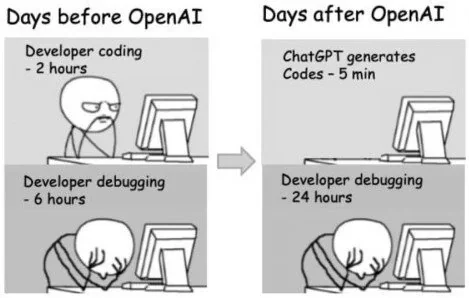
This article looks at how that shift is unfolding and what it means for the future of AI in game development workflow.
TL;DR (Key Takeaways)
- AI in game development is changing how games are built, not who builds them.
- The biggest gains come from redesigning the game dev workflow, not from using more tools.
- AI accelerates execution, but understanding and intent remain human responsibilities.
- Smart teams use AI selectively to reduce iteration cost, improve testing, and support creativity.
- The future belongs to developers who combine strong judgment with AI-enabled workflows.
How Developers See AI Changing the Games Industry
For years, AI adoption in game studios followed a familiar pattern:
- Use it for automation
- Apply it to repetitive tasks
- Keep it at the edges of production
That phase is ending.
Developers now report that AI is moving into core workflow layers – especially game engines, gameplay balancing, prototyping, and cross-team collaboration. Rather than focusing on isolated tools, teams see AI reshaping decision-making, iteration speed, and long-term game operations.
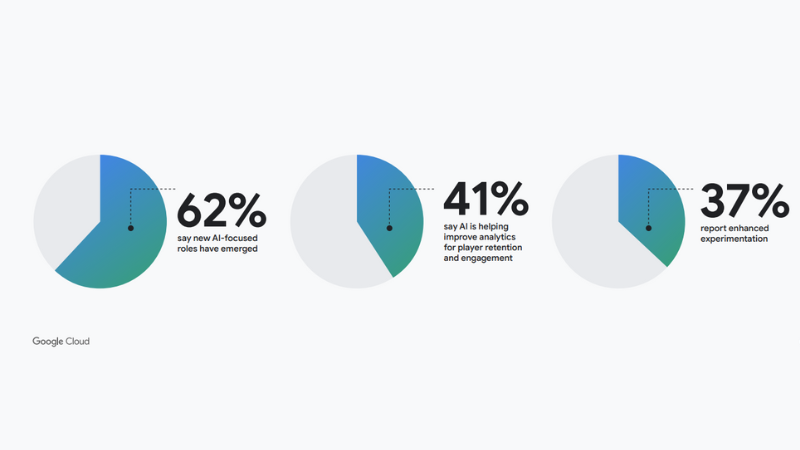
Key signals from developers include:
- 41% say AI improves player retention and engagement analytics, enabling smarter live-ops and design decisions
- 40% report faster development and delivery through cheaper, earlier iterations
- 38% see AI helping maintain and extend older games, a critical factor for live-service titles
- 29% cite the democratization of game development, as smaller studios gain access to advanced capabilities
In short, developers don’t see AI in game development as replacing creativity – they see it as changing how value is created, scaled, and sustained across the games industry.
How Developers See AI in Game Development Changing the Workflow
Across daily development tasks, developers observe that AI is influencing workflows at multiple levels, with an overall positive effect on how teams operate.
Faster Prototyping, Tighter Iteration Loops
Speed has always been a competitive advantage in game development. What AI is changing is how quickly teams can think, test, and iterate together.
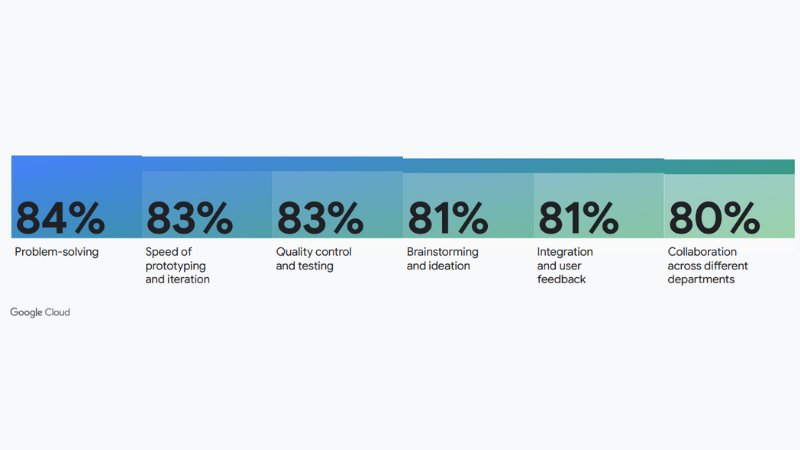
According to developers, AI significantly improves the speed of prototyping and iteration, with 83% reporting faster iteration cycles and 84% saying AI helps them solve problems more effectively during development.
In practice, this means:
- Ideas can be tested earlier, without waiting for full implementations
- Gameplay loops are validated sooner in the process
- Teams spend less time stuck and more time moving forward
Iteration is no longer gated by manpower – it’s gated by clarity of intent.
Faster Prototyping, Tighter Iteration Loops
Speed has always been a competitive advantage in game development. What AI is changing is how quickly teams can think, test, and iterate together.
According to developers, AI significantly improves the speed of prototyping and iteration, with 83% reporting faster iteration cycles and 84% saying AI helps them solve problems more effectively during development.
In practice, this means:
- Ideas can be tested earlier, without waiting for full implementations
- Gameplay loops are validated sooner in the process
- Teams spend less time stuck and more time moving forward
Iteration is no longer gated by manpower – it’s gated by clarity of intent.
AI as a Creative Co-Pilot
A common concern around AI in game development is that it might destroy creativity. Developers report the opposite.
AI is actively supporting brainstorming and ideation, with 81% saying it improves creative exploration during early-stage work
Instead of replacing creative judgment, AI helps remove early friction:
- Teams explore more ideas without committing heavy resources
- Creative discussions move faster with shared context
- Decisions are made earlier, not deferred
The creative role doesn’t disappear – it becomes more focused.
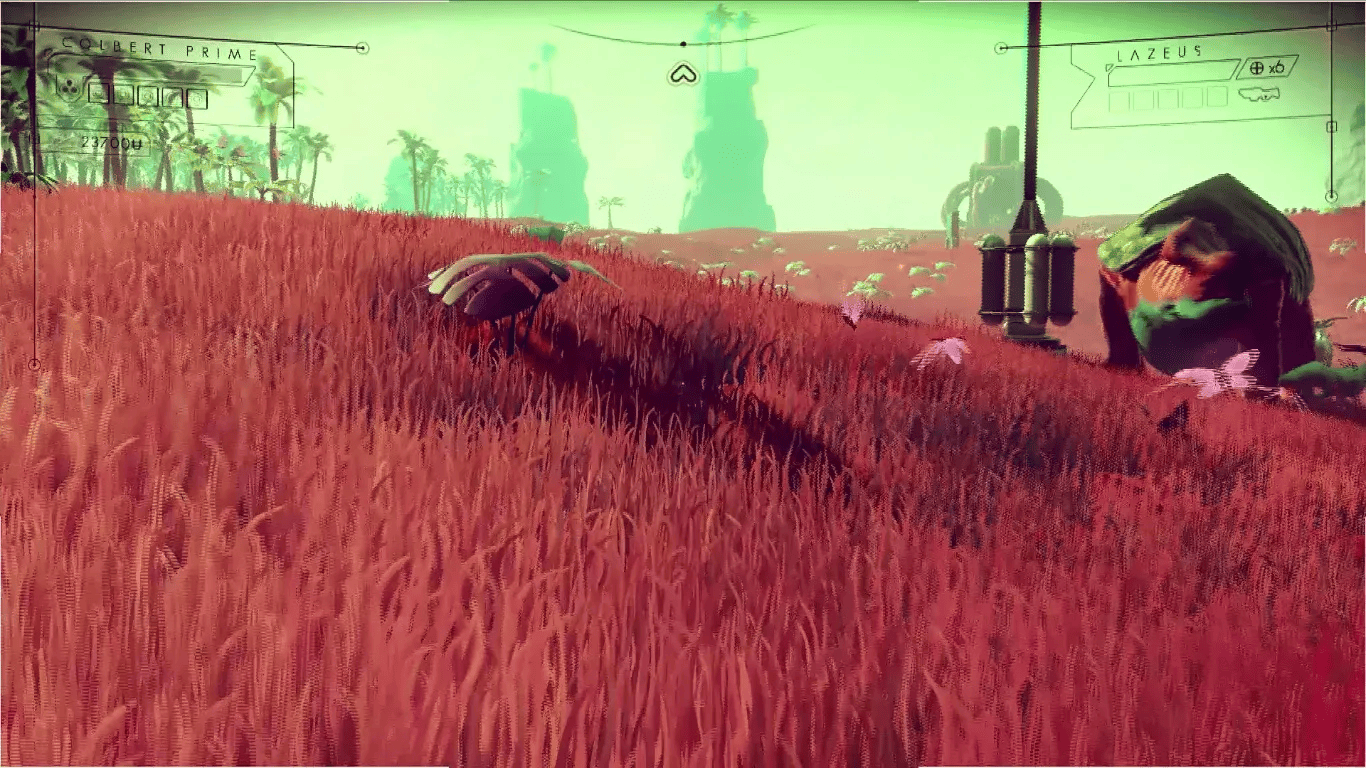
Example: In No Man’s Sky, Hello Games uses AI-driven procedural systems to generate vast planets, allowing designers to shape rules and intent while AI scales world creation.
Quality Control, Testing, and Feedback Loops
Testing and quality control have traditionally been among the most time-consuming parts of the game dev workflow.
Developers report that AI is changing this dynamic. 83% say AI improves quality control and testing, while 81% report better integration of user feedback into the development process.
This enables:
- Earlier detection of issues
- Faster validation of changes
- Continuous feedback instead of late-stage crunch
Testing becomes part of the workflow – not a bottleneck at the end.

Example: At EA Sports, AI-driven testers simulate millions of match scenarios in FIFA, automatically detecting physics issues, collision bugs, and edge cases. This allows teams to identify problems overnight instead of weeks later, turning testing into a continuous feedback loop rather than a late-stage bottleneck.
Cross-Team Collaboration Is Being Rewired
AI doesn’t just improve individual productivity – it reshapes how teams work together.
According to the survey, 80% of developers say AI improves collaboration across teams, helping align design, engineering, testing, and production more effectively.
AI creates shared context by:
- Making data and insights accessible across roles
- Reducing translation gaps between disciplines
- Aligning intent with execution earlier in the process
In complex productions, alignment often matters more than speed—and AI increasingly enables both.
AI-Powered Game Development vs. Traditional Pipelines
The difference between traditional and AI-powered game development is how feedback flows through the pipeline.
Traditional Game Development Pipelines
- Linear progression: design → build → test → fix → ship
- Late feedback: major issues often surface near the end of production
- Manual tuning: balancing, QA, and iteration depend heavily on human effort
- High cost of change: late adjustments are expensive and risky
- Static systems: gameplay logic and difficulty are largely pre-defined
This model works, but it struggles as games grow more complex and player expectations rise.
AI-Powered Game Development Workflows
- Continuous iteration: testing, tuning, and feedback happen throughout development
- Early validation: prototypes and mechanics are evaluated before full production
- Automated support: AI assists with testing, balancing, analytics, and feedback integration
- Lower iteration cost: teams explore more ideas with less risk
- Adaptive systems: gameplay, difficulty, and content evolve based on data
Instead of reacting to problems late, teams learn earlier and adjust continuously.
Next Steps: Best Practices for Implementing AI in Game Development
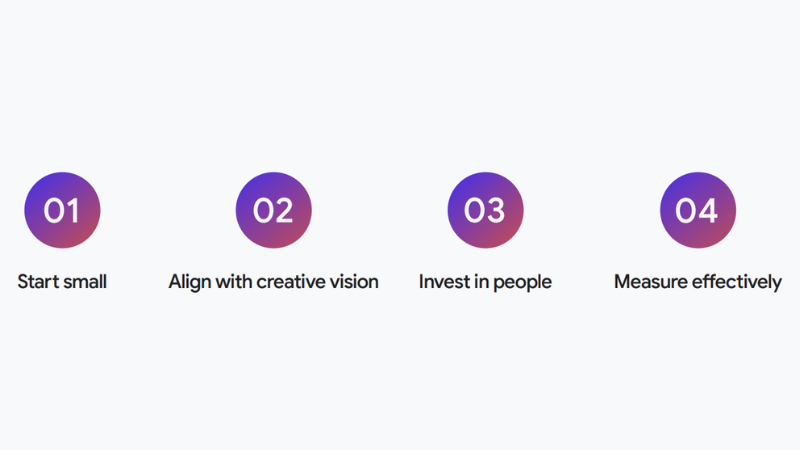
When developers consider how to move forward with AI adoption, they consistently point to four best practices that balance experimentation with control.
- Start small: 40% of developers recommend beginning with small-scale pilots or testing before full implementation, allowing teams to identify challenges early and refine workflows before committing significant resources.
- Align with creative vision: 39% emphasize that AI use should reflect the game’s creative goals, ensuring automation enhances (not distorts) the intended player experience.
- Invest in people: 39% stress the importance of training and upskilling teams on AI tools, recognizing that AI delivers value only when developers understand how to use it effectively.
- Measure effectively: 38% recommend establishing clear success criteria upfront, so teams can evaluate what’s working, what isn’t, and iterate with confidence.
GIANTY’s POV: AI in Game Development Doesn’t Fix Dev Workflows
After running AI pilots within our game development teams, one thing became clear:
AI doesn’t fix workflows, but it exposes them.
Where pipelines were clear, AI reduced iteration cost and accelerated progress. Prototyping became faster, testing more continuous, and teams spent more time making decisions instead of waiting.
Where workflows were unclear, AI simply surfaced the problems sooner.
GIANTY – Your Next AI in Game Development Partner
We treat AI as an operating layer that removes friction once intent and workflow are clear – not as a shortcut around them. Our takeaway is simple: As shown in our case study, we used AI in a 30-day game prototype to speed up iteration and reduce friction, but AI never worked alone. Human judgment stayed firmly in the loop.
And because AI tools are maturing rapidly, the advantage will go to the studios that adopt early. If you’re exploring AI in your next game, whether for prototyping, gameplay systems, or AI-driven NPCs, our team is ready to collaborate. Reach out to GIANTY for your next AI in Game Development plan!
FAQs
1. What is the difference between AI in game development and traditional game development?
Traditional game development relies on fixed rules and predefined scripts. AI-driven systems can learn, adapt, and respond dynamically, enabling evolving worlds, smarter NPCs, and gameplay that reacts to player behavior in real time.
2. Can indie or small studios use AI in game development?
Yes. Many AI tools are modular and cloud-based, allowing indie and mid-sized studios to start with low-risk use cases such as testing, analytics, or asset support without heavy infrastructure or large upfront investment.
3. What are the risks of using AI in game development?
Key risks include poor data quality, IP and copyright concerns, ethical misuse, and loss of creative control. These risks can be mitigated through clear governance, defined ownership, and keeping human judgment in the loop.
4. How does AI improve player experience in video games?
AI improves player experience by enabling adaptive gameplay, more realistic NPC behavior, personalized challenges, and dynamic environments—making games feel more responsive and immersive.
5. Will AI in Game Development replace game designers or artists?
No. AI enhances creativity by handling repetitive and mechanical tasks. Human designers still lead storytelling, emotional design, and creative vision. The most successful teams use AI as a collaborator, not a replacement.