The debate between co-development vs. outsourcing isn’t new in the games industry but the stakes have never been higher.
Years rencently, the games industry cut over 20,000 jobs while simultaneously shipping some of its most technically ambitious titles to date. Studios are doing more with smaller internal teams, which means external partners now carry a larger share of actual production. For original IP, multi-platform launches, and games where art, code, and narrative have to evolve together, the fixed-spec handoff breaks at exactly the wrong moment. That pressure is what’s driving the shift to co-development – a model where the external studio doesn’t just execute the brief, but helps shape the game.
What Is the Difference Between Game Co-Development vs. Outsourcing?
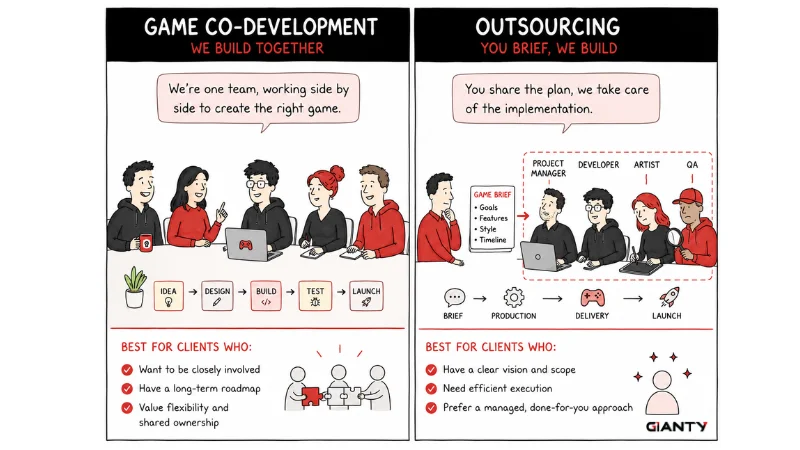
Game outsourcing means contracting an external team to deliver specific work to your specification like a set of 3D assets, a game porting, a QA pass, a defined feature. You define the scope, they deliver the output, you integrate it. The relationship is transactional: brief in, deliverable out.
Game co-development means building the title alongside an external studio as a shared creative and technical partner. You define the vision together, design the systems together, and hold joint accountability for how the game ships. Both teams share context. Both teams own outcomes.
The distinction sounds clean between co-development vs. outsourcing. The operational difference runs deep.
In outsourcing, the external team optimizes for delivery against spec. In co-development, the external team optimizes for the game — which sometimes means flagging that a core mechanic isn’t landing before it’s been fully built, recommending a different engine approach based on what’s already in production, or pushing back on a design decision because the downstream cost isn’t visible in the brief.
Why the Model Shift Is Happening Now
Three forces are making outsourcing harder to rely on for ambitious titles:
1. You can’t fully spec a great game in advance. A design document can describe how a mechanic works. It can’t capture how it feels and feel is what players judge. Art direction evolves through production. Narrative systems affect gameplay balance. Economy tuning changes level design. In co-development, the external team is part of those discovery loops. In outsourcing, they’re executing against a document that’s already behind the current state of the game.
2. Original IP requires creative trust, not just execution. When the game is an original IP your characters, your world, your story every production decision carries creative risk. An outsourced team working to a brief doesn’t share that stake. A co-dev partner does. They bring craft judgment to the work: what serves the IP, what breaks it, what the player will feel six hours in. That’s not something a spec document transfers.
3. Multi-system interdependency makes isolated handoffs expensive. Modern games are tightly coupled: the combat system affects animation, animation affects audio, audio affects the feel of UI feedback, UI affects onboarding. Outsourcing one layer without co-developing across them creates integration debt that surfaces late — when it’s most expensive to fix. Co-development keeps all layers in shared context throughout production.
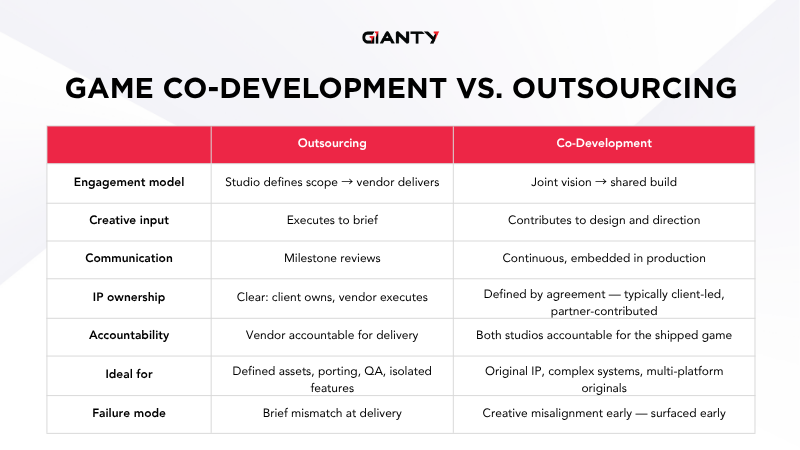
Game Co-Development vs. Outsourcing: A Direct Comparison
Both models use external studios. Both involve contracts, deliverables, and deadlines. The difference between co-development vs. outsourcing is in where the external team’s responsibility begins and ends — and whether they share the creative and production stakes of the game itself.
When Outsourcing Still Makes Sense
Between co-development vs. outsourcing, co-dev isn’t the right model for every game or every studio relationship. Outsourcing remains effective when:
- The scope is well-defined and isolated — a set of environment assets, a localization pass, a platform port with clear acceptance criteria
- The work is style-guide execution, not creative origination
- The deliverable is separable — it doesn’t require deep integration with evolving systems
- Speed and cost efficiency are the primary constraints, and the quality bar has a testable threshold
Game outsourcing works when the problem is a delivery problem. When the problem is a game problem with creative vision that needs to breathe, systems that affect each other, and a player experience that no brief can fully define so the outsourcing model creates friction where you need flow.
The GIANTY Model: What Game Co-Development Looks Like in Practice
At GIANTY, we use the term “trusted partner” deliberately — because it describes how we actually work, not how we position ourselves.
When we engage as a co-development partner, we’re part of the creative and production conversation from the start. Not after the GDD is locked. Before it. We bring both craft judgment and production capacity and we stay accountable through launch, not just through delivery.
Here’s what that looks like inside a real game co-dev engagement:
Creative framing together. We start with the experience, not the spec. What is the player supposed to feel? What makes this IP irreplaceable? Where does the concept have risk? Those questions shape every production decision that follows — and they can only be answered with deep shared context.
Joint system design. The game’s architecture — core loop, progression, economy, narrative branching — is designed with both studios’ constraints and craft instincts in play. The IP holder understands the vision. GIANTY brings production-grade engineering and the cross-platform experience to execute it at scale. Neither side has the full picture alone.
Shared accountability through ship. Our measure of success isn’t asset delivery. It’s the game reaching players in the form it was meant to — playable, polished, and true to the original creative intent.
Quality standard that holds. GIANTY brings Japanese-standard engineering and QA discipline to every project — not as a credential, but as a production practice. It shows in how we handle edge cases, how we approach optimization, and how we treat the details that players notice even when they can’t name them.
The clearest way to understand this model is to look at a project where it’s running.
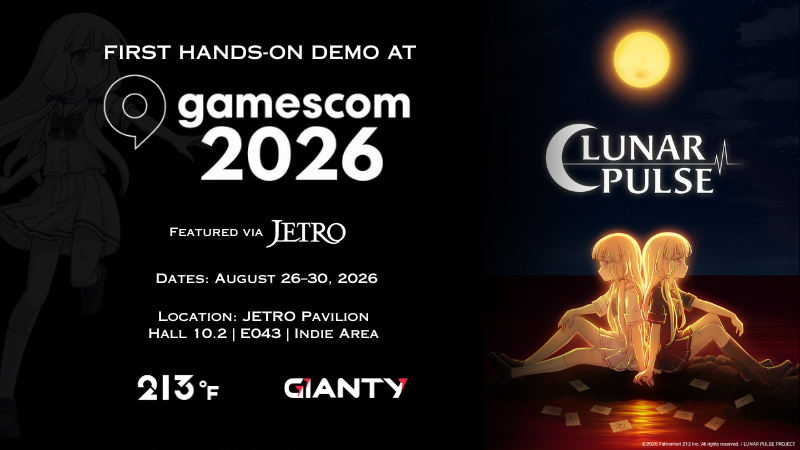
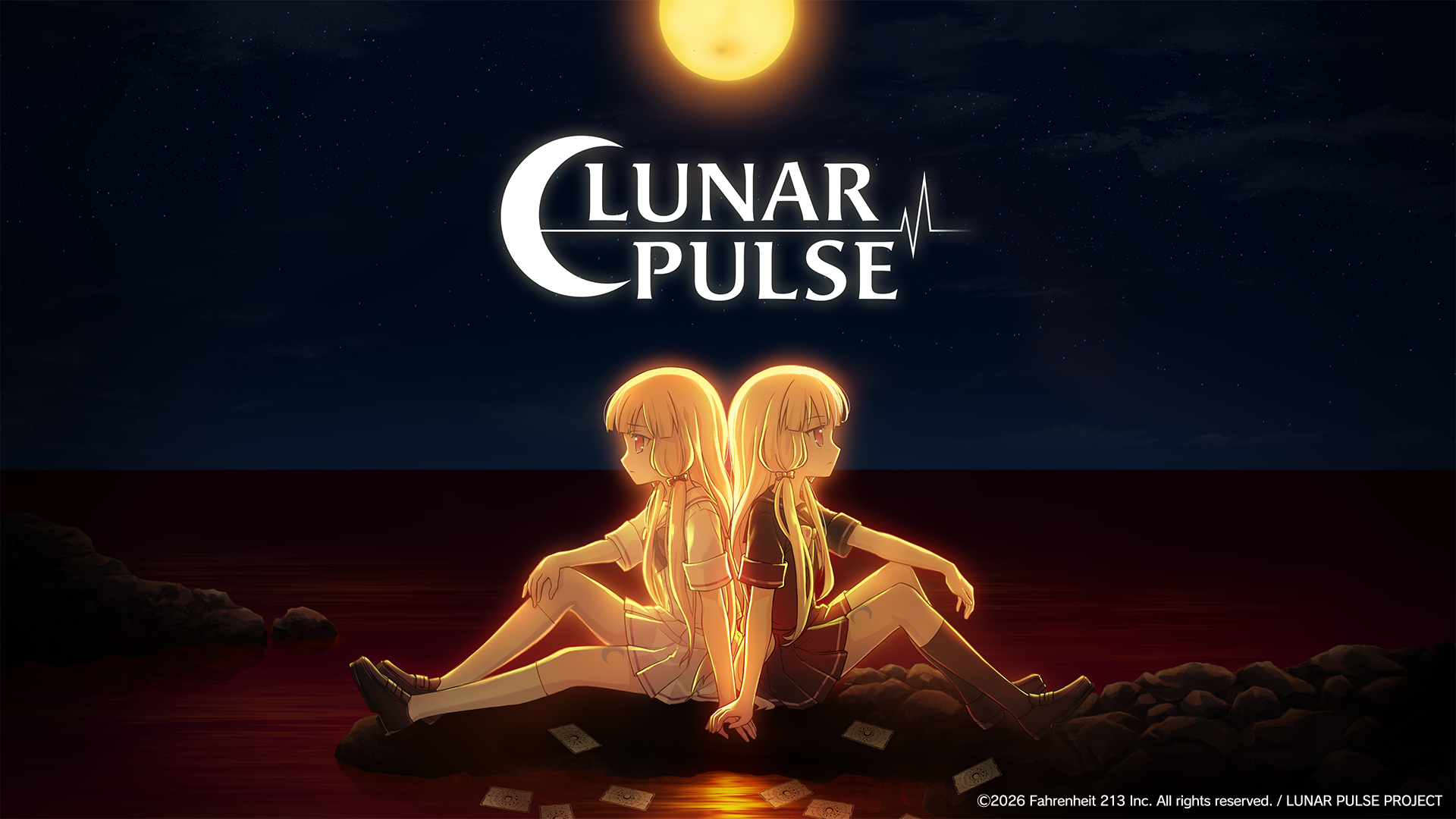
In April 2026, GIANTY and Fahrenheit 213 (213℉) officially announced LUNAR PULSE, a Roguelite card game confirmed for Steam release in 2027.
Fahrenheit 213 brought the creative vision — two decades of pedigree in narrative-driven design, and a philosophy of creating works that cannot be replaced in a lifetime. GIANTY brought production engineering, multilingual infrastructure, and the development capacity to take an ambitious original concept to a 2027 ship date.
How to Choose Between Co-Development vs. Outsourcing
Before choosing an engagement model co-development vs. outsourcing, answer three questions:
1. How defined is the scope? If you can write the full brief today and it won’t change — outsource. If the game will evolve through production and creative discovery — co-develop.
2. How much does the external team’s craft judgment matter? If you need execution to a clear standard — outsource. If you need a team that can protect and contribute to the creative vision — co-develop.
3. How tightly coupled is the work to everything else? If the deliverable is isolated — outsource. If it touches the core loop, the feel of the game, or the systems that everything else builds on — co-develop.
FAQs About Co-Development vs. Outsourcing
What is the difference between co-development vs. outsourcing in game development?
Co-development is a collaborative partnership where both the client and external team actively contribute to the project, share responsibilities, and align closely throughout development. Outsourcing usually involves delegating specific tasks or services to an external vendor with less day-to-day collaboration.
Between co-development vs. outsourcing, which is better for long-term game projects?
Co-development is often better for long-term game projects because it enables stronger communication, shared creative ownership, and continuous collaboration between teams. Outsourcing may work better for short-term production tasks or specialized support.
How do studios choose between Co-Development vs. Outsourcing?
Studios should choose co-development when they need strategic collaboration, scalable development support, live operations assistance, or long-term production alignment. Outsourcing is more suitable for isolated tasks such as QA testing, asset production, or localization.
What are the advantages of co-development vs. outsourcing?
The main advantages of co-development include:
- Better communication between teams
- Shared creative vision
- Higher flexibility during production
- Faster iteration cycles
- Stronger integration with internal workflows
Outsourcing mainly offers cost efficiency and task delegation but may involve less transparency and creative alignment.
Does GIANTY only co-develop specific game genres?
GIANTY has shipped original titles and co-developed across action RPG, card game, and narrative-driven genres. Our existing title GOKEN is a Japanese-style action RPG — so we bring direct IP development experience, not just contract history. If the project has creative ambition and production complexity, it’s worth a conversation.
Final Thoughts
The game co-development vs. outsourcing choice ultimately comes down to this: outsourcing builds what you specify. Co-development builds what the game needs.
For studios bringing original IP to market — with creative stakes, complex systems, and a player experience that no brief can fully define — the distinction is the difference between a vendor and a partner.
If you’re planning an original title and want to talk about what a co-development structure would look like, let’s start the conversation.